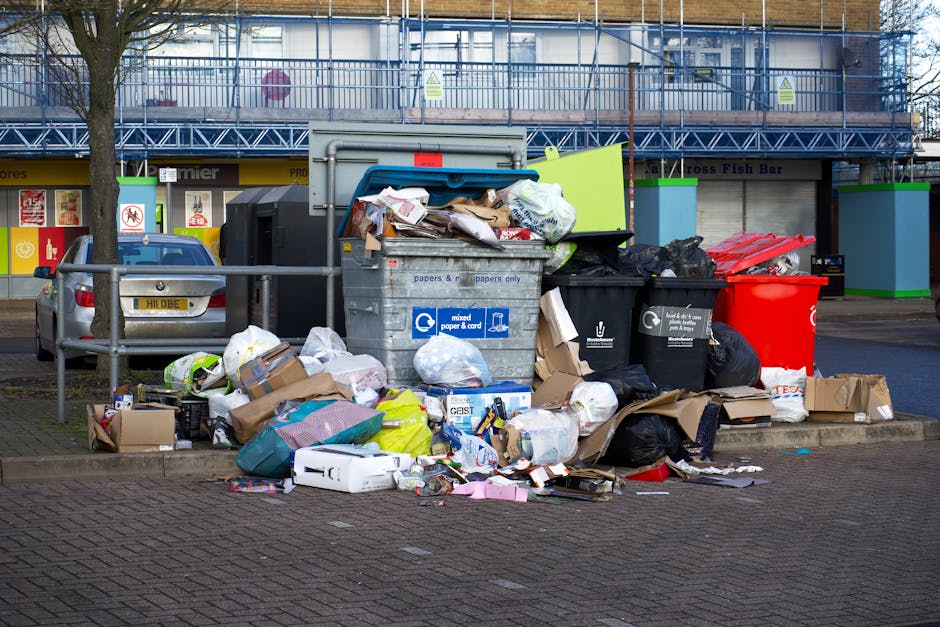
Abbey Wood high street shop commercial rubbish removal guide

If you run or manage a shop on Abbey Wood high street, rubbish has a habit of building up faster than you expect. Cardboard boxes, broken display units, old stock, packaging, plastic wrap, damaged appliances, and the odd mystery item from the back room - it all piles in quietly, then suddenly the space feels cramped. This Abbey Wood high street shop commercial rubbish removal guide is here to make that process clearer, calmer, and much more manageable.
The aim is simple: help you clear commercial waste without disrupting customers, staff, or trading hours. You will find practical steps, timing advice, compliance notes, common mistakes, and a realistic way to plan a tidy shopfront and back-of-house area. Truth be told, a well-managed clearance often saves more time than people think.
Practical takeaway: good rubbish removal is not just about getting rid of waste. It is about keeping the shop presentable, safe, and ready for trade. That matters on a busy high street where first impressions are made in seconds.
Why Abbey Wood high street shop commercial rubbish removal matters
A high street shop has different waste pressures from an office or a warehouse. There is often less space, more foot traffic, tighter access, and a stronger need to keep the frontage looking clean. If you leave waste tucked beside the till area or stacked near the entrance, customers notice. Staff notice too. And on a wet London day, damp cardboard and mixed rubbish can start to smell quicker than anyone would like.
Abbey Wood high street businesses also tend to operate in a live, shared environment. That means there is a practical balance to strike between clearing waste quickly and avoiding nuisance to neighbours, passers-by, and delivery drivers. A neat removal plan helps with that. It is not fancy. It is just sensible.
There is also a business case. Regular commercial rubbish removal can reduce clutter, make stock handling easier, and improve safety in the back room. A clear space is easier to count, clean, and work in. That sounds obvious, but in busy retail life, obvious things are often the first to slip.
If your waste is broader than standard shop refuse, you may need a more tailored service. For example, stockroom clearances, mixed commercial waste, and larger disposal jobs often overlap with business waste removal or, where heavy items are involved, general waste removal. If you are clearing shelves, counters, or storage furniture, then furniture disposal can be part of the picture too.
How Abbey Wood high street shop commercial rubbish removal guide Works
Most commercial rubbish removal jobs follow a fairly straightforward pattern. You identify what needs to go, sort it into sensible groups, choose the right collection method, and arrange a time that does not clash with trading. Simple on paper. A bit less simple when the stockroom is full and you are trying not to upset the lunch rush.
In practice, the process usually starts with a walk-through. You look at what is waste, what can be reused, and what may need separate handling. That is important because not everything can be bundled together and whisked away in one go. Cardboard, timber, metal, damaged fittings, electrical items, and confidential waste may each need different treatment.
A good clearance plan should also consider access. High street shops often have limited loading space, nearby parking restrictions, and narrow entry points. If the team collecting the rubbish cannot get near the rear of the shop, then carrying items out through the front may be the only option. That is where timing matters. Early morning, late afternoon, or a quieter trading window can make the difference between a smooth job and a stressful one.
If you are dealing with back-office documents, customer paperwork, or old admin files, confidential shredding is worth considering rather than mixing those papers in with general waste. Likewise, if the clearance includes broken fridges, chillers, or appliance units, then fridge and appliance removal is a safer route than trying to improvise.
One small but useful note: the best commercial rubbish removal jobs are rarely dramatic. They are well planned, quiet, and boring in the best possible way. Nobody wants a dusty, noisy, half-finished clearance with bags left out front while customers are walking in and out. Nobody.
Key Benefits and Practical Advantages
There are several good reasons to treat shop rubbish as a proper operational task rather than an afterthought. A tidy waste plan makes the whole place feel sharper. It also helps you work faster and with fewer surprises.
- Cleaner customer experience: a clear frontage and uncluttered entrance feel more welcoming.
- Better use of space: stockroom and storage areas work much better when waste is not taking up room.
- Lower safety risk: fewer trip hazards, fewer loose items, and less chance of awkward blockages.
- Less disruption: a scheduled collection can be timed around opening hours and deliveries.
- Improved sorting: separating recycling, general rubbish, and specialist waste usually makes disposal easier.
- More professional presentation: the shop feels organised even during busy periods or refits.
For many Abbey Wood shop owners, the biggest benefit is simply breathing room. A cramped stockroom can make even small tasks feel twice as hard. Once waste is cleared, everything becomes easier to find and easier to move. You notice it immediately.
There is also a sustainability angle. If you are trying to reduce what goes to landfill, it helps to work with a provider that understands recycling and sorting. A responsible approach to recycling and sustainability can support your environmental goals without adding complexity to daily trading.
Who This Is For and When It Makes Sense
This guide is useful for shop owners, managers, franchise operators, landlords preparing a unit, and tenants who are handing a site back. It also applies to anyone responsible for clearing a retail space in Abbey Wood where the waste is too bulky, too mixed, or too awkward for normal bins alone.
It tends to make sense in a few common scenarios:
- after a shop refit or small refurbishment
- when old shelving, displays, or counters need replacing
- after a stockroom reorganisation
- before a lease inspection or end-of-tenancy handover
- during seasonal changes when old stock and packaging pile up
- after equipment breaks or becomes obsolete
A small high street retailer may only need an occasional clear-out. A busier shop may need repeat collections. There is no single rule that fits everyone, which is why it helps to assess waste as part of operations rather than waiting until things get messy.
To be fair, many business owners only realise they need help when the waste starts interfering with trading. That is usually the point where the back room stops being storage and starts being a problem. If that sounds familiar, you are not alone.
Step-by-Step Guidance
Here is a simple way to handle shop waste without overcomplicating it.
- Walk the site and identify waste types. Separate cardboard, mixed rubbish, reusable items, broken fixtures, appliances, and any potentially hazardous materials.
- Decide what can be reused or donated. Some fittings or furniture may still have value, especially after a refit.
- Set aside specialist waste. Electrical items, confidential papers, and chemicals should not be bundled with general rubbish.
- Check access and timing. Think about loading points, parking, trade hours, and whether collections need to happen before opening.
- Request a clear quote. Be ready to describe the volume, type of waste, and any access issues. Photos help, and yes, they save a lot of back-and-forth.
- Prepare the site. Make sure the items to be removed are easy to reach and separated from anything staying on-site.
- Let the collection happen. Good removals should be efficient, careful, and minimally disruptive.
- Review the result. Check that the area has been left tidy and that waste has been handled as agreed.
If you are unsure whether some items are suitable for a skip-style load, it may help to check what can go in a skip. That page can be useful as a rough guide, even if your shop clearance ultimately needs a more flexible collection method.
A good rule of thumb: if an item is awkward, heavy, mixed-material, or possibly regulated, do not assume it can go with everything else. Ask first. It avoids headaches later.
Expert Tips for Better Results
After enough clearances, you start to see the same patterns again and again. The jobs that go smoothly are usually the ones where someone has thought ahead by even a little. That is all it takes sometimes.
- Photograph the waste before collection. It helps with quoting and keeps everyone on the same page.
- Group similar items together. Cardboard, plastics, timber, and display furniture should not be mixed if you can avoid it.
- Plan around delivery windows. A missed delivery slot can be more annoying than the clearance itself.
- Keep walkways open. Staff and customers should not be stepping around waste bags.
- Label items if the store is busy. A simple sign like "keep" or "remove" can prevent confusion.
- Think about noise. Metal frames, broken shelving, and old fixtures can be louder than expected when moved.
One thing people often miss is the value of partial clear-outs. You do not always need to empty the whole unit at once. A focused removal of back-room clutter, damaged stock, or obsolete fixtures can make a big difference with far less disruption. That is especially handy in a trading environment where every square metre matters.
Another useful habit is to review waste every week, not once a quarter. Ten minutes on a Friday can save an afternoon of sorting later. Not glamorous, but very effective.
Common Mistakes to Avoid
The mistakes here are usually practical, not dramatic. Still, they can slow everything down or make collections more expensive than they need to be.
- Leaving waste until it blocks access. Once the stockroom is hard to walk through, the job becomes harder for everyone.
- Mixing specialist items into general rubbish. That includes electronics, appliances, sharp items, and confidential paperwork.
- Ignoring opening hours and street activity. A collection at the wrong time can get in the way of customers and deliveries.
- Underestimating volume. Small items add up quickly, especially packaging and broken display materials.
- Forgetting about compliance. Shop waste still needs proper handling, even if it looks harmless.
- Not checking what remains on site. It is surprisingly easy to remove the wrong pile and leave the one you meant to shift.
The most common problem, honestly, is thinking the job is simpler than it is. A few bags of rubbish? Easy. But add a metal shelving unit, a fridge, some old POS hardware, and a stack of paperwork, and suddenly you need a plan.
Tools, Resources and Recommendations
You do not need a big toolkit to organise shop rubbish removal, but a few simple things make life easier.
- Black bags and heavy-duty sacks for general mixed waste
- Boxes or tubs for separating reusable stock, documents, and small parts
- Marker pens and labels for quick sorting
- Gloves and basic protective gear when handling sharp or dusty materials
- Phone camera for photos before quoting or collection
- Tape, cable ties, or wrap to secure loose components
For larger business jobs, it can be useful to look at pages that explain related services such as builders waste clearance if your shop waste comes from a fit-out or refit, or office clearance if the job includes admin space, filing, desks, and old equipment. Those situations often overlap more than people expect.
If the waste includes large or awkward furniture, it may also be worth reading about furniture clearance. That can help you decide whether items are best removed as part of a broader commercial load or handled separately.
And if you are comparing providers, do not just look at the headline price. Ask what is included, how access is handled, and whether the waste is sorted responsibly. A low quote can become a noisy problem if the details are vague.
Law, Compliance, Standards and Best Practice
Commercial waste in the UK should be handled responsibly, and businesses remain responsible for how waste is stored, transferred, and removed. The exact duties can vary depending on the type of waste, but the basic principle is straightforward: do not leave waste unmanaged, and do not assume a collection is compliant just because it is convenient.
For shop owners, the safest approach is to use a provider that can explain how waste is handled and separated, especially where there are mixed materials, electrical items, or potentially hazardous substances. If you have cleaning liquids, aerosols, batteries, fluorescent tubes, or other risky materials, it is wise to discuss them before collection rather than drop them in with general waste.
Where the site involves extra safety concerns, a provider's own procedures matter too. It is sensible to review their health and safety policy and, if relevant, their approach to insurance and safety. That is not being fussy. That is being sensible.
If there are confidential materials, a proper shredding route is better than a general rubbish pile. If there are appliances, specialist removal avoids damage and awkward handling. If there is anything hazardous, use a dedicated route such as hazardous waste disposal. You do not want guesswork here.
For a high street retailer, best practice also includes respecting neighbours and public space. Avoid blocking pavements, keeping waste out overnight where possible, and ensuring removal does not create litter. Small thing, big difference.
Options and Comparison Table
Different shop clearance jobs call for different methods. The right choice depends on how much waste you have, what type it is, and how quickly it needs to go.
| Method | Best for | Pros | Watch-outs |
|---|---|---|---|
| General commercial rubbish removal | Mixed shop waste, bagged rubbish, small fixtures, packaging | Flexible, quick, suitable for awkward loads | Needs good sorting if waste types vary a lot |
| Skip-style disposal | Bulk waste where access is straightforward and waste is fairly consistent | Handy for ongoing work, simple to load | May be less ideal for tight high street access or mixed regulated items |
| Specialist item removal | Appliances, confidential files, hazardous materials, large furniture | Safer handling, better compliance | Can require separate scheduling or handling |
| Full shop clearance | End of lease, refit, closure, major stockroom clean-out | Most complete solution, saves coordination time | Needs more planning and clear access |
If you are unsure, a mixed commercial clearance is often the most practical route because it can handle several waste streams in one visit. But again, the exact mix matters. A shop that sells electronics will have different needs from a clothing retailer, and a cafe-style high street unit will differ again.
Case Study or Real-World Example
Imagine a small Abbey Wood high street shop that has just updated its displays before a seasonal promotion. The team has old shelving, damaged packaging, a broken under-counter appliance, and a stockroom full of redundant boxes. Nothing unusual. But the waste is spread across front and back areas, and trading still has to continue.
Rather than letting the clutter build for a week, the manager sorts the items into clear groups: reusable stock, general waste, cardboard, furniture, and the appliance. Photos are taken. The collection is timed for early morning, before the shutters go up. Staff clear the pathway, and the removal team takes the mixed load away in one organised visit.
The result is not dramatic, but it is noticeable. The shop feels lighter. Staff can move more easily behind the counter. The back room is no longer swallowing half a day's work. And customers walking past no longer see a pile of broken fittings leaning by the entrance. Simple win, really.
That sort of job is a good example of why planning matters. The clearance itself may only take a short time, but the preparation turns it from a hassle into a tidy operation.
Practical Checklist
Use this before arranging a commercial rubbish removal for your Abbey Wood shop.
- Have I identified exactly what needs removing?
- Have I separated general waste from appliances, confidential papers, and hazardous items?
- Are there items that could be reused, donated, or sold instead of disposed of?
- Is access clear for collection?
- Have I chosen a time that avoids peak trading and deliveries?
- Do I know roughly how much waste there is?
- Have I taken photos to help with quoting?
- Have I checked whether specialist handling is needed?
- Are staff aware of what is staying and what is going?
- Have I reviewed the provider's policies where relevant?
If you can tick most of those off, you are already ahead of the game. And if you cannot, that is fine too. It just means the job needs a bit more thought before collection day.
Get a free quote today and see how much you can save.
Conclusion
A well-planned shop clearance on Abbey Wood high street is not just about removing rubbish. It is about protecting trading space, reducing stress, and keeping your business looking organised and professional. The smartest approach is usually the one that respects access, separates waste types properly, and fits around the rhythm of the shop day.
Whether you are clearing packaging after a busy spell, dealing with old fixtures, or preparing for a refit, a sensible process saves time and keeps things moving. The bigger lesson is this: rubbish becomes easier to manage when you stop treating it like an afterthought.
If you need a deeper overview of the company behind this service, you can also read the about us page. And if you are ready to take the next step, the book online option is there when you need it.
At the end of the day, a clear shop feels better to work in. You can hear the difference, almost. Less clatter, less crowding, less fuss. That matters more than people think.
Frequently Asked Questions
What counts as commercial rubbish in a high street shop?
Commercial rubbish includes waste created by trading activity, such as cardboard, packaging, old stock, broken fittings, damaged display units, and back-room clutter. In some shops, it can also include appliances, confidential paperwork, or waste from a refit.
Can I mix shop waste together in one removal?
Sometimes, yes, but only if the waste types are compatible and do not require separate handling. It is usually better to sort items first so general waste, appliances, paperwork, and any hazardous materials are dealt with appropriately.
Is commercial rubbish removal better than using regular bins?
For small daily waste, regular bins are fine. But for bulky, mixed, or one-off clearances, commercial rubbish removal is usually much more practical. It handles larger loads and reduces the risk of overflow or clutter around the shop.
Do I need to close the shop during rubbish removal?
Not always. Many collections can be arranged outside peak trading hours or during quieter periods. It depends on access, volume, and whether the waste needs to come through the customer-facing area.
What if my shop has old furniture or shelving?
That can usually be included as part of a furniture clearance or broader commercial clearance. Large shelving, counters, and display furniture often need careful removal because they can be bulky and awkward to move.
How do I know if something needs specialist disposal?
If the item is electrical, hazardous, confidential, or potentially contaminated, it may need specialist handling. That includes fridges, cleaning chemicals, batteries, and paperwork containing sensitive information.
What should I do with confidential documents from the shop?
Use a proper confidential shredding route rather than putting documents into general waste. It is a simple step, but it makes a real difference to security and peace of mind.
Can a clearance help during a shop refit?
Yes. In fact, refits are one of the most common reasons shops arrange rubbish removal. It helps clear old fixtures, packaging, and debris so the work can move along without piles getting in the way.
How can I keep costs under control?
Sort waste before collection, remove items you want to keep, and provide clear photos or a proper description of the load. The cleaner the brief, the fewer surprises there are. That is usually where savings come from.
What if my shop has mixed waste and I am not sure what goes where?
That is common. A mixed waste assessment is usually the safest way forward. Separate obvious specialist items first, then group the rest by material if you can. When in doubt, ask before collection day.
Is there a difference between shop clearance and office clearance?
Yes, though there is often overlap. Shop clearance focuses more on retail stock, fittings, packaging, and customer-facing items, while office clearance usually involves desks, files, electronics, and admin furniture. Some premises need both.
What is the best time to arrange a shop waste collection?
Early morning or late in the day often works best because it reduces disruption to customers and deliveries. For some high street locations, a quieter weekday slot is the smoothest option.