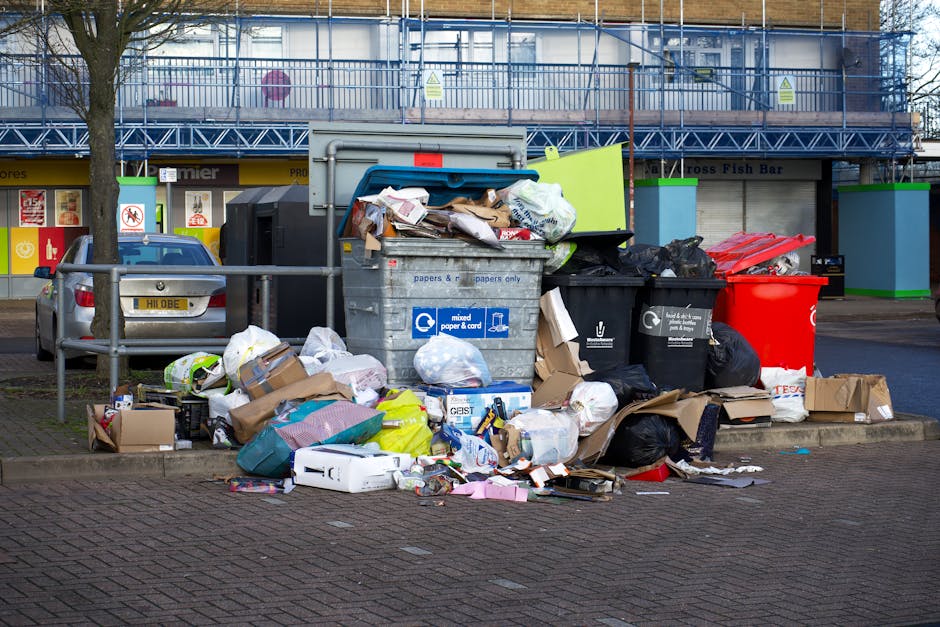
Commercial Waste Removal in Abbey Wood
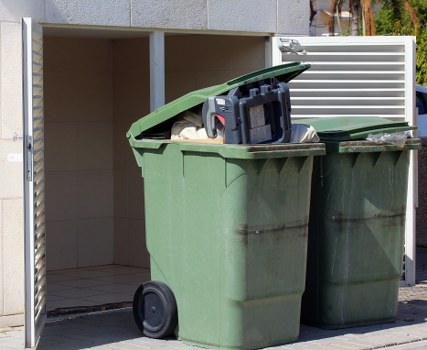
Commercial waste removal in Abbey Wood needs to be practical, orderly and suited to the type of premises being cleared. We handle mixed workplace waste, recurring business rubbish and one-off clearances for organisations that want a tidy, straightforward service. The focus is on making disposal easier for offices, shops, hospitality venues, trades, landlords and other commercial premises that need rubbish moved without unnecessary disruption. When waste is collected properly, spaces stay usable and day-to-day work can continue with less clutter.
Our service covers a broad range of business waste streams, from general refuse and packaging through to deskside clear-outs, bulky fittings and end-of-tenancy items. We work with commercial customers who need flexible, responsible removal rather than a one-size-fits-all approach. Different loads need different handling, so the service is best planned around what is actually on site, how it is stored and where it needs to go next. That means the arrangement can be kept clear, proportionate and suited to the job in hand.
For a more specific plan, it helps to think about the waste by category and access. If you already know what needs collecting, you can ask for a quotation and describe the load in plain terms. If you are still sorting through items, a simple list is usually enough to begin. Pricing and quotes gives a useful place to start when you want to understand how the work is assessed. When you are ready, request a quotation and we can help shape the collection around your premises.
Business waste collection for everyday operations
Every business produces waste differently. Some premises need regular clearances of sacks, cardboard and packaging; others only need occasional help after a refit, stock rotation or equipment change. Commercial waste collection is most effective when the collection method fits the way the business runs. That can mean removing loose mixed waste from a back room, lifting heavier items from a storeroom or clearing out accumulated rubbish from shared work areas without blocking access routes.
For business customers, clarity matters as much as speed. It is useful to separate reusable items, recyclable materials and general disposal loads before collection day where possible. If the site contains large or awkward items, the route out of the building and any restrictions on loading should be considered as well. Our business waste removal page is relevant when you want a more focused view of commercial collections and the type of premises they suit. The aim is always a clean handover with less disruption than a general tip run.
Commercial waste can build up gradually, which is why some customers prefer an occasional clearance while others want a more routine approach. The right solution depends on volume, item type and how quickly the premises needs to be restored for normal use. Where bulky items are involved, it may be better to treat them separately so the rest of the waste can be sorted efficiently. A simple, well-described load is easier to assess and usually easier to remove in one visit.
Office waste, desk clear-outs and equipment disposal

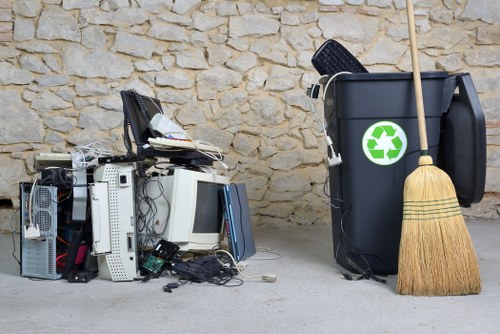
Office waste removal often involves more than bins and paper. It can include chairs, filing, broken peripherals, obsolete screens, storage units and general clutter from rooms that need to be reconfigured. Offices also tend to contain a mixture of recyclable material and items that need careful disposal, so a sensible collection plan helps keep the process controlled. Where the goal is to free up working space, it is best to remove the obvious bulk first and then deal with smaller waste once the main items have gone.
We can deal with office clear-outs that arise from moves, reorganisations and routine rationalisation of furniture or equipment. In a busy workplace, it is often useful to work room by room so that essential items stay in place while surplus material is taken away. The office clearance page covers this kind of work in more detail and is a useful destination if the job involves a broader workspace tidy-up rather than a simple rubbish collection. The result should be a cleaner area that is easier to use productively.
When old furniture or equipment is mixed in with regular waste, the best outcome usually comes from separating the job into practical groups. Keep any sensitive documents or specialist items apart from standard refuse, and make a note of anything that is especially heavy, fragile or awkward to move. If you are preparing an enquiry, one useful step is to give a concise description of each type of item and whether it is stored upstairs, in a basement or near a loading point. Confidential shredding may also be relevant where secure paper disposal needs to sit alongside the wider office clearance.
Bulky items, furniture and appliance removal
Commercial premises often need help with larger objects that are awkward to move through corridors or tight back areas. Furniture removal can include office seating, tables, cabinets and shelving, while appliance removal may involve fridges, microwaves or similar units that have reached the end of their service life. The main practical issue is usually access: heavy items need planning so they can be removed without damaging walls, floors or fixtures. Good handling makes the job safer and leaves the premises ready for whatever comes next.
The service also works well when fittings are being replaced in stages rather than all at once. Some customers only need a single bulky item collected, while others want several pieces lifted together so the room can be reset quickly. If you are comparing options, the furniture disposal page can help you think through the sort of items that are best removed as part of a commercial clearance. The aim is to separate what stays from what goes, so the site remains orderly throughout the process.
For mixed loads, it is usually better to identify the heaviest or most difficult items first. That helps with planning and can reduce delays on collection day.
- List large items separately from bagged waste.
- Note anything fixed, dismantled or stacked.
- Flag restricted access, stairs or narrow passages.
- Keep reusable stock distinct from rubbish where possible.
Builders waste and site clearance support

Commercial waste removal is often closely linked with refurbishment, fit-out or maintenance work. Builders waste can include broken packaging, timber offcuts, plasterboard, old fixtures, tiles and other material left after work has been completed. The key requirement is to clear the site without interrupting the job that is still in progress. Because this kind of waste is often mixed and bulky, it benefits from a service that can handle varied material types in a controlled way.
Where a premises is being altered, a partial clearance may be all that is required between stages of work. A shop fit-out, storage upgrade or office refit can leave behind waste that needs shifting before the next tradesperson arrives. The builders waste clearance page is a suitable reference when the waste comes from construction or refurbishment activity rather than routine business rubbish. If there are sharp edges, dusty materials or heavy broken components, those details should be noted before collection.
It is often useful to think about builders waste in terms of load type rather than simply by the room it came from. Some material is best bagged, some stacked and some kept separate for easier handling. Mixed construction waste can take longer to sort than a tidy pile of similar material, so a clear description of what is on site will help the work run more smoothly. If you need a quotation, explain whether the items are loose, bundled or still partly assembled.
Household-style clearances for commercial property
Not every commercial property contains only office furniture or trade waste. Landlords, letting agents and property managers often need help with items that look more like domestic contents, such as sofas, beds, wardrobes, kitchen units or general household clutter left in a flat above a shop or in a managed building. In those cases, the job is still commercial in nature because it is tied to the property being run, let or prepared for use. The collection approach needs to be practical and respectful of the building.
Where contents have to be taken from a property as part of turnover or management work, the load may involve mixed household items, soft furnishings and loose rubbish. The house clearance page may be useful if you want to understand a broader contents-removal approach, while flat clearance is relevant where the property type itself affects access, stairs or storage. These pages help indicate the sort of material that can be included when the job is not limited to ordinary business waste.
In practical terms, clearances of this kind work best when the items to remain are identified early and anything destined for removal is grouped together. That keeps the process efficient and reduces the risk of taking anything that should stay on site. If there are pieces with sentimental or document value, separate them before collection rather than leaving them among the rubbish. The more precise the description, the easier it is to organise the right level of help.
Garage, loft and storage-area waste
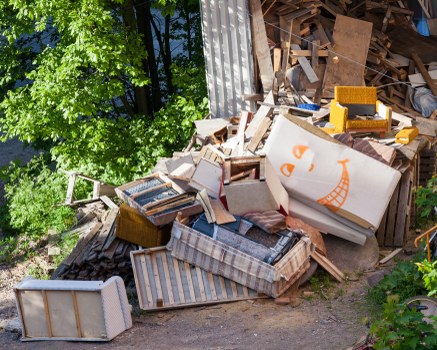
Some commercial addresses contain back rooms, roof spaces, basement stores or outbuildings that have filled with unused stock, packaging and miscellaneous waste. Those areas can be awkward because the contents are often piled high, partly hidden or mixed together after years of being used for overflow storage. A careful clearance gives the business a better view of what is actually being kept and what has simply been left in place. That can be important when storage costs or access space matter.
The garage clearance page is relevant where a storage area has become cluttered with commercial overflow, while loft clearance can be a useful reference for upper-level spaces that need careful handling. These kinds of jobs often include awkward lifting, narrow access and a need to work systematically through the contents rather than rush. A sensible approach is to keep a path clear, identify fragile items and avoid shifting too much at once if the space is tightly packed.
Because storage areas often contain mixed material, it helps to decide in advance what is to be kept, recycled, reused or removed. That decision makes the collection more efficient and reduces the chance of unnecessary handling. If a business uses a garage or loft for seasonal stock, archive boxes or surplus fittings, a targeted clearance can return the space to a usable condition without disturbing the items that still matter. For many customers, that is the simplest way to get back control of a difficult area.
Choosing the right waste stream and collection method
Commercial waste removal is rarely just about taking away everything that is visible. Different waste streams can call for different handling, especially where the load includes recyclable material, white goods, mattresses, furniture, mixed rubbish or items with more specific disposal needs. The best option depends on what has to leave the property and how it is stored. A well-matched service makes the job cleaner, easier to organise and less likely to create extra sorting work later.
Some customers only need a straightforward clear-out of everyday business rubbish, while others need help with specialist items or a collection split across several rooms. The waste removal page suits general mixed loads, while fridge and appliance removal is more relevant where electrical items are involved. If the contents are soft furnishings rather than general rubbish, mattress and sofa disposal offers a more precise route. Matching the service to the waste can save time and make the quotation clearer.
When choosing the right collection method, think about the physical shape of the load as much as its material type. Bagged rubbish, stacked stock, dismantled furniture and bulky single items all behave differently in transit and on site. That is why a brief but accurate description matters. If in doubt, describe the biggest pieces first and then the smaller waste around them. Clear information tends to lead to a better-organised collection and fewer surprises on the day.
About Abbey Wood
Abbey Wood is an area in south-east London associated with the historic woodland and the later growth of residential and transport links around it. The name is linked to Lesnes Abbey, a 12th-century Augustinian abbey founded by Richard de Luci in 1178, although the abbey itself was dissolved centuries later and now survives as ruins within Lesnes Abbey Woods. The woods remain one of the area’s best-known landscape features, combining ancient woodland, open spaces and evidence of long settlement history. Nearby streets and estates reflect later suburban development, especially from the late 19th and 20th centuries, when rail connections encouraged building beyond the older rural edges of Kent and London. Today the district sits within the Royal Borough of Greenwich and borders other parts of south-east London, with a built environment shaped by housing, local centres and transport corridors. Abbey Wood station has become an important local landmark in its own right, particularly since Crossrail services opened there, bringing faster links into central London and beyond. The area also includes a range of parks, playgrounds and everyday shopping streets, so its character is a mix of woodland heritage, transport change and ordinary urban life. That combination gives Abbey Wood a distinctive feel: neither a purely suburban estate nor a historic village centre, but a place where layers of development are still visible in the streetscape, the green spaces and the way local routes connect to the wider city.
Price factors, access and scheduling
Commercial waste prices are usually shaped by straightforward practical factors rather than by fixed assumptions. The volume of material, the mix of item types, the weight of the load and the access to the premises all matter. A clear route from the waste area to the collection point can simplify the job, while stairs, locked doors, narrow corridors or awkward parking can make it more involved. For that reason, the most useful quotation is one based on the actual load and site conditions.
It also helps to know whether the waste is already gathered in one place or spread across several rooms. A single stack near the entrance is easier to assess than material stored in a basement, loft or rear yard. If you want to keep the enquiry efficient, prepare a short summary of the main items and mention anything that needs special lifting or separation. About us offers further background, while the main point here is simply that a precise description normally leads to a more suitable response. Request a quotation when you are ready to compare the job against the right level of collection work.
If your premises produces waste regularly, it can be useful to think about how often the accumulation needs attention and whether the load changes through the week. A recurring collection may suit some operations, while others only need a one-off clear-out after a reorganisation or refurbishment. Request a quotation if you want to move forward with a clearly described load and arrange the next practical step.